The term refers to a linguistic, literary or artistic form which expresses noble or elevated feelings and behaviour. The concept of sublime was analysed by an unknown rhetorician of the 1st century AD who identified the sublime with the beautiful and found its origin not in the perfection of style but in the passion of inspiration echoing in the soul .
Friday, 28 September 2012
Friday, 21 September 2012
PERSUASION BY JANE AUSTEN - NOTES & LINKS FOR 5scB GROUP WORK
Persuasion was Jane Austen's last completed novel, written between summer 1815 and summer 1816. In 1816 the author fell into the lingering illness which eventually killed her, in July 1817.
Austen herself may have suspected the plot lacked her normal sparkle, since she thought the original ending was 'tame and flat', and rewrote it (the revised ending has a number of hanging threads which, perversely, leave a piquant taste). In March 1817 she told her niece Fanny Knight that she had another novel ready for publication, but added: 'You will not like it, so you need not be impatient. You may perhaps like the Heroine, as she is almost too good for me.' Discriminating critics have, more often, found it her most mature—if least funny—work. The novel was published posthumously in a four-volume bundle along with Northanger Abbey (her least mature work), by John Murray, in December 1817 (dated 1818 on the title page), together with an informative 'Biographical Notice of the Author' written by Jane's brother (and sometime unofficial literary agent) Henry Austen. The novel's action can be precisely placed (thanks to the Baronetage entry on the first page) as being over nine months,summer 1814 to spring 1815.
Study questions - Reflect on the following points
1. Is Anne a frail or a strong woman? What do you most like in her? What, instead, do you like the least?
2. What about Captain Wentworth? Is he too proud, too austere, too resentful toward Anne? What do you most admire in his character? Is there anything you don't like?
Tuesday, 18 September 2012
Stanford Researchers: Reading Jane Austen “A Truly Valuable Exercise of People's Brains”
Read this interesting article
Sunday, 16 September 2012
AN OVERVIEW OF LATE 18th - EARLY 19th CENTURY FICTION
The last three decades of the 18th century saw a great amount of new fiction written and published in England. The novel had risen at the beginning of the century to respond to the needs of culture and education of the new ascending social class: the bourgeoisie. A new sensibility was now spreading and , though the audience was still made up of upper and middle-class readers, the novelists offered a great variety of new genres rooted in and indebted to the previous production of Richardson, Fielding or Sterne but different and original in many ways
If you have a look at the chart below, you’ll immediately realize that the major representatives of the three main kinds of novel wrote or published more or less in the same years.
Friday, 25 May 2012
SAMUEL RICHARDSON - PAMELA & CLARISSA
PAMELA, OR VIRTUE REWARDED (1740)
The story Pamela has been the servant girl of Lady B. for many years. When the noblewoman dies, Pamela is very sad: she loved Lady B. because she had always been very good to her and given her an education far beyond her means. Mr B., Lady B.’s son, offers to let her remain in the household and Pamela accepts with gratitude, but it soon becomes clear that Mr B. intends to seduce her . He then offers to send her home to her parents, but the coachman, who is one of Mr B.’s men, drives her instead to Mr B.s country house, where she is virtually a prisoner. The girl, however, resists all of her master’s advances until Mr B., who is really in love with Pamela, finally asks to marry him. The second part of the book shows Pamela and Mr B.’s married life. Pamela is the model wife and MR B. too is in the end converted to a sober well-regulated life.
Saturday, 19 May 2012
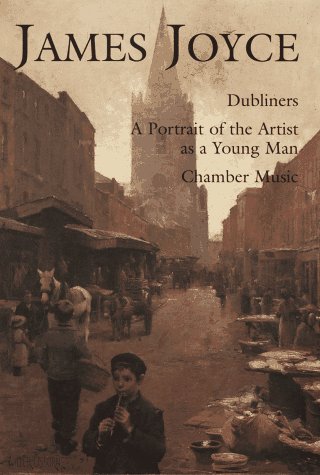
READING DUBLINERS BY JAMES JOYCE (1914)
TRUTH AS THE SUBJECT OF ART
To defend his work harshly attacked for his bitterness and his inconvenient realism, Joyce asserted that for their “spiritual liberation” the Irish needed to gaze in his “nicely polished looking-glass”, Joyce suggests that by seeing themselves so faithfully represented the Irish would come to a moment of “anagnorisis” or self-recognition, a recognition which would be “the first step” out of “hemiplegia” or unilateral paralysis in which they currently existed.
“What’sthe matter with you is that you’re afraid to live. You and people like you. This city is suffering from hemiplegia of the will” Joyce remembered to his brother Stanislaus. According to him, by reading his Dubliners , Dubliners would recognize their paralysis, that recognition would stimulate movement, “ a first step toward freedom, toward civilization.
Joyce’s aim in Dubliners seems that of the satirist whose purpose in writing is to expose vice or folly to the end of correction. The common feature among the 15 stories is that the protagonists do not react to their paralysis or when they try to escape it they fail; they all fail.
Tuesday, 8 May 2012
THE AGE OF MODERNISM - PART II
VIRGINIA WOOLF AND THE NEW NOVEL
(notes from an old book of mine, E. Chinol ENGLISH LITERATURE vol.II, Liguori Editore, 1983. I hope you can find them useful)
The main development of the early 20th century novel represents a break with the naturalist school and a movement towards a more subtle and complex vision of man and his world. The break occurred during the second decade of the century (“on or about December 1910” Virginia Woolf said, “ human nature changed”), when a new generation of writers began to question the conventions and the pretended objectivity of the traditional novel. Also with the help of new developments in psychology, especially of Freud’s psychoanalysis, they proposed to go beyond the apparently rational surface of the conscious mind, digging deep into the obscure, irrational world of the unconscious. And with them reality becomes a matter of personal impressions; the focus of attention shifts from external facts to our reactions to them.
Monday, 7 May 2012
THE AGE OF MODERNISM - PART I
MODERNISM AND THE NOVEL
In terms of the novel's development, World War I (1914-18) marks a fundamental break between the old world and the new. Fiction before this period generally followed the styles, forms and themes of the Victorian period, although writers such as Henry James and Joseph Conrad had already begun to develop techniques that would later be more fully exploited by the modern novel.For many people the experience of the war, in which hundreds of thousands had been killed, shattered their faith in society and its institutions. Mechanised industry had prospered on the backs of underpaid labourers. Now those same workers were being sent to their deaths in the trenches in a similarly mechanical manner. With the 1914-18 war, the dehumanising effects of industrial society reached their peak.
The Modernists, horrified by the effect of war and mechanised society in general, were interested in recovering the unique experience of the indiviaduals by exploring and recreating their inner world.
The Modernist novel was to shatter most conventions which had typified Victorian fiction. The co-ordinates of the Victorian moral universe collapsed and was replaced by a climate of moral ambiguity or even by a sense of emptiness which signalled and absence of values. All this was reflected in the themes of most modernist novels.
Sunday, 6 May 2012
DEFOE AND SWIFT - A COMPARISON AND OTHER NOTES
LEMUEL GULLIVER - Although Gulliver is a bold adventurer who visits a multitude of strange lands, it is difficult to regard him as truly heroic. Even well before his slide into misanthropy at the end of the book, he simply does not show the stuff of which grand heroes are made. He is not cowardly—on the contrary, he undergoes the unnerving experiences of nearly being devoured by a giant rat, taken captive by pirates, shipwrecked on faraway shores, sexually assaulted by an eleven-year-old girl, and shot in the face with poison arrows. Additionally, the isolation from humanity that he endures for sixteen years must be hard to bear, though Gulliver rarely talks about such matters. Yet despite the courage Gulliver shows throughout his voyages, his character lacks basic greatness. This impression could be due to the fact that he rarely shows his feelings, reveals his soul, or experiences great passions of any sort. But other literary adventurers, like Odysseus in Homer's Odyssey, seem heroic without being particularly open about their emotions. (...)
If you want to continue reading CLICK HERE
Tuesday, 1 May 2012
VIRGINIA WOOLF IN THE MOVIE "THE HOURS" - CLIPS
Virginia Woolf became a complex, fascinating character in Michael Cunningham's THE HOURS (1999). When the movie was released in 2002, the role of Virginia , interpreted by Nicole Kidman, brought to the Australian actress the Oscar as Best Actress.
Here are two clips from that movie
Sunday, 29 April 2012
MRS DALLOWAY BY VIRGINIA WOOLF - CLARISSA AND SEPTIMUS
THE STORY
Mrs. Dalloway covers one day from morning to night in one woman's life. Clarissa Dalloway, an upper-class housewife, walks through her London neighborhood to prepare for the party she will host that evening. When she returns from flower shopping, an old suitor and friend, Peter Walsh, drops by her house unexpectedly. The two have always judged each other harshly, and their meeting in the present intertwines with their thoughts of the past. Years earlier, Clarissa refused Peter's marriage proposal, and Peter has never quite gotten over it. Peter asks Clarissa if she is happy with her husband, Richard, but before she can answer, her daughter, Elizabeth, enters the room. Peter leaves and goes to Regent's Park. He thinks about Clarissa's refusal, which still obsesses him.
Friday, 13 April 2012
ULYSSES BY ALFRED TENNYSON
![]() |
| Lord Alfred Tennyson (1809-1892) |
Ulysses by Alfred Tennyson (1833) is a dramatic monologue, a kind of narrative poem in which a single character may address one or more listeners. It is related to the soliloquy used in the Elizabethan plays.
It is usually written in blank verse (unrhymed iambic pentameters).
In a dramatic monologue the character is different from the poet himself and is caught in a crucial moment of crisis.
By this still hearth, among these barren crags,
Match’d with an aged wife, I mete and dole
Unequal laws unto a savage race,
That hoard, and sleep, and feed, and know not me.
I cannot rest from travel: I will drink
Life to the lees: All times I have enjoy’d
Greatly, have suffer’d greatly, both with those
That loved me, and alone, on shore, and when
Thro’ scudding drifts the rainy Hyades
Vext the dim sea: I am become a name;
For always roaming with a hungry heart
Monday, 9 April 2012
THE MYTH OF ROBINSON CRUSOE
1. ROBINSON AS THE SUCCESSFUL SELF- MADE MAN
According to the critic Ian Watt, Robinson Crusoe exemplifies the homo economicus, the successful self-made man who enjoys and exploits the island where he was shipwrecked:
"Crusoe's island gives him the complete laissez faire which economic man needs to realizes his aims. At home, market conditions, taxation, and problems of the labour supply make it impossible for the individual to control every aspect of productionistribution and exchange. The conclusion is obvious. Follow the call of the wide open places, discover an island that is desert only because it is barren of owners or competitors and there build your personal empire with the help of a man Friday who needs no wages and makes it much easier to support the white man's burden" .
Watt claims for Robinson the title of capitalist:
Tuesday, 3 April 2012
THE 18th CENTURY AND THE RISE OF THE NOVEL
| Robinson Crusoe |
These interesting questions are the ones we are going to try to give an answer reading several passages from Daniel Defoe's ROBINSON CRUSOE, Jonathan Swift's GULLIVER'S TRAVELS as well as working in small groups on projects about Tobias Smollet, Henry Fielding, Samuel Richardson and Laurence Sterne.
These are also the questions a celebrated scholar like Ian Watt tried to answer in his well-known essay "The Rise of the Novel". Here's an excerpt from the opening pages:
Friday, 30 March 2012
THE 18th CENTURY - THE HANOVERIANS AND THE AUGUSTAN AGE
ZOFFANY, Johann (1733 - 1810)
Generally regarded as a golden age, the 18th century in England was called Augustan after the period of Roman history which had achieved political stability and power as well as a flourishing of the arts. In addition to the pages in your text book, download ( from the flash_widget box on the right ) and study the Power Point Presentation "The 18th century" with notes about the historical, social and cultural context of the age.
Monday, 26 March 2012
OSCAR WILDE & THE END OF AN AGE - THE PICTURE OF DORIAN GRAY
"Live! Live the wonderful life that is in you. Be always searching for new
sensations. Be afraid of nothing(...)"
O. Wilde from THE PICTURE OF DORIAN GRAY
Friday, 16 March 2012
THE THEME OF THE DOUBLE: CALVINO AND STEVENSON
To find links and connections between different literatures can be interesting as well as useful while preparing the interdisciplinary Esame di Stato.
The double is one of those themes which have aroused the interest of all literatures in all ages : Hoffmann, Dostoevskij, Gogol, Gautier, Maupassant, Poe, Calvino, Conrad and Kafka, to name only a few, have all, like Stevenson, probed the notion of duality.
The double, or doppelganger, is a second self, or alter ego, which appears as a distinct and separate being perceived by the physical senses, but existing in a dependent relation to the original. "Dependent" does not mean "subordinate"; in fact often the double comes to dominate, control and usurp the functions of the subject. It became also a device of psychological penetration for many writers.
Calvino's humorous short story "Il visconte dimezzato" deals with the same
Tuesday, 13 March 2012
FRANKENSTEIN VS JEKYLL
1. THE FIGURE OF THE OVERREACHER - The two protagonists are scientists who, led by their great ambition, fulfill their achievement but, thus doing, they overcome the limits and borders imposed to them by ethics, nature or God. Their punishment is death by exhaustion in one case, by self-destruction in the other. Both are OVERREACHERS, rebels who go beyond the limits imposed to Mankind by God or Nature, who have their prototype in Prometheus, the mythical Titan who defied Zeus stealing the fire from the Olympus.
Saturday, 10 March 2012
ROBERT LOUIS STEVENSON, THE STRANGE CASE OF DR JEKYLL AND MR HYDE (1886)
Power Point Presentation with notes about the author
can be found in the Widget_ box on the right
1. ROBERT LOUISE STEVENSON
2. The Strange Case of Dr Jekyll and Mr Hyde
1. ROBERT LOUISE STEVENSON
2. The Strange Case of Dr Jekyll and Mr Hyde
Friday, 24 February 2012
LAB ACTIVITIES - IMPROVING LISTENING & SPEAKING
A. Speak English Fluently - Rule 3
Watch the video and anwer the questions below
Tuesday, 21 February 2012
SOCIAL ISSUES IN VICTORIAN BRITAIN - CHILDREN AT WORK
Children had an unhappy childhood. They worked hard to satisfy the needs of their parents because families were very poor and they didn't have enough money, so children worked. They underwent very difficult conditions of employment. Days were long for them : eight or twelve hours a day, six days a week. Children worked in manufactories.
At that time, there was no insurance and when children had accidents or were ill they didn't have any help. Many children often worked with adults : they worked under the same conditions. Children were small, they could go into narrow spaces, children were clever too and employers appreciated these qualities. Nowadays , in poor countries, many children often work to help their parents but the conditions of employment may be better than the industrial revolution in England.
Tuesday, 14 February 2012
THE GIFT OF ENGLISH BY CORNELIS DE JONG
Break out of the mould. Dare to grasp the most beautiful thing in life: language. English is free - anyone may possess it. He who acquires it at school, if the teacher was good, will have received the most valuable gift of all; more valuable than any other gift he is likely to receive for the rest of his life.
Although language is the most complex subject we will ever learn in our lives, we are perfectly equipped to acquire language from an early age; in fact we have the capacity to acquire several languages of almost equal fluency as our mother tongue. There have been many studies on bi- or multilingualism, but one thing is certain: starting off life (for the first 10-12 years) with just one language is by far the better option.
Just how complex is language, compared to, say, mathematics? We cannot be certain (as yet) but if the volume of connections in the brain invested in language is an indicator, it must be in the order of many, many times more complex. On the other hand, this may be a false indicator as we probably allocate about as much space in our brains to facial recognition: body language is as important to us as verbal and vocal language.
Monday, 23 January 2012
THE INDUSTRIAL NOVEL - SHIRLEY BY CHARLOTTE BRONTE (1849)
Set in Yorkshire during the time of the Luddite unrest—a workers' movement that began in 1811-1812 in an effort to protect the interests of the working class—the novel consists of two narrative strands woven together, one involving the struggles of workers against mill owners, and the other involving the romantic entanglements of the two heroines.
Plot
Shirley begins as Robert Moore, a Yorkshire mill operator, awaits a shipment of machinery which arrives in pieces, smashed by angry workers protesting the loss of jobs to mechanization. Although he is determined to become successful in order to restore his family's honor and fortune, Robert's business difficulties continue, due in part to the continuing labor unrest, but even more so to the Napoleonic Wars and the accompanying Orders in Council which forbid British merchants from trading in American markets.
Wednesday, 18 January 2012
MASTERS & WORKERS : MR THORNTON AND NICHOLAS HIGGINS, THE IDEAL RELATIONSHIP ACCORDING TO MRS GASKELL
Monday, 9 January 2012
ELIZABETH GASKELL AND THE INDUSTRIAL NOVEL - MARY BARTON (1848) - POWER POINT PRESENTATIONS, WORKSHEET & VIDEO
In the Flash_Widget Box on the right you'll find two Power Point Presentations related to Mrs Gaskell and her first novel, Mary Barton (1848):
- Gaskell ppt- Mary Barton ppt
Click on the icons in the box and download them.
With Mrs Gaskell and her "industrial" or "social - problem" novels,
we will be able to experience a completely new world as readers, that of Victorian industrial cities with their restless, fierce and troublesome citizens: factory owners and factory workers, "masters" and "hands", the rich and the poor.
Industrialization was radically changing the strictly conservative Victorian society but the strife to obtain modernity and basic rights was to be long, hard, paved with sufference and tragedy for workers.
Subscribe to:
Posts (Atom)
.jpg)


.jpg)